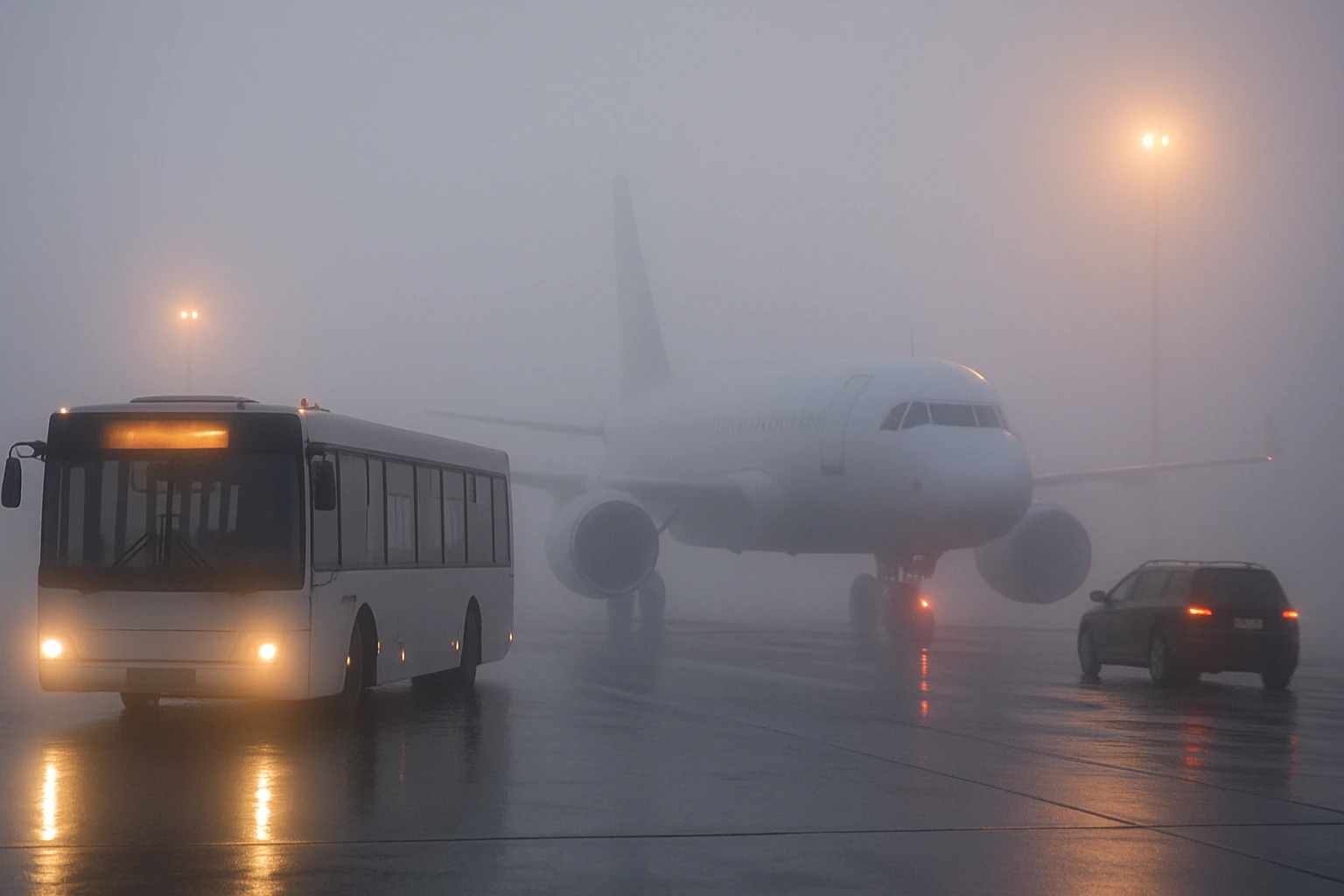
Dense fog has enveloped Kutaisi and surrounding areas, causing significant transportation disruptions and safety concerns that have affected both local residents and travelers passing through the region. Visibility has been reduced to less than 50 meters in some areas, creating hazardous conditions for all forms of transportation and requiring immediate response from transportation authorities and emergency services. The fog conditions have been particularly challenging due to their persistence and the large geographic area affected, making it difficult for transportation systems to operate normally.
The fog conditions have impacted multiple transportation systems throughout the region, creating a cascade of delays and disruptions. Highway traffic between Tbilisi and western Georgia has been significantly affected, with reduced speed limits and increased travel times for vehicles making this important route. Local bus services in Kutaisi have experienced delays and cancellations, affecting daily commuters and residents who rely on public transportation for their daily activities. Train services on the Tbilisi-Batumi route have been delayed due to reduced visibility and safety concerns, affecting both passenger and freight transportation.
Domestic flights to and from Kutaisi International Airport have been particularly affected by the fog conditions, with many flights delayed or cancelled due to safety concerns. The airport has implemented enhanced safety protocols to ensure the safety of passengers and crew, including increased spacing between aircraft and additional safety checks. Delivery services and logistics operations have also been impacted, with delays in the transportation of goods and materials throughout the region. These disruptions have affected businesses that rely on timely delivery of supplies and products.
Transportation authorities have implemented several comprehensive safety measures to address the fog-related challenges and ensure public safety. Reduced speed limits have been established on affected highways to reduce the risk of accidents in low-visibility conditions. Increased police presence has been deployed for traffic management, with officers providing guidance to drivers and ensuring compliance with safety regulations. Some bus routes have been temporarily suspended where conditions are particularly hazardous, with alternative transportation options provided where possible.
Enhanced airport safety protocols have been implemented at Kutaisi International Airport, including additional runway lighting, improved communication systems, and enhanced weather monitoring capabilities. These measures help ensure that flights can operate safely when conditions permit, while preventing flights during unsafe conditions. Public announcements and warnings have been issued through various media channels to keep the public informed about current conditions and safety recommendations.
Drivers are being strongly advised to take specific precautions when traveling in foggy conditions. Using fog lights and low beam headlights is essential for improving visibility and making vehicles more visible to other drivers. Maintaining safe following distances is crucial, as stopping distances increase significantly in foggy conditions. Reducing speed significantly is necessary to allow adequate reaction time and prevent accidents. Avoiding unnecessary travel when possible helps reduce the overall risk and congestion on roadways. Staying informed about road conditions through official channels helps drivers make informed decisions about their travel plans.
The fog is expected to persist for the next 24-48 hours, with gradual improvement expected by the weekend. Weather conditions are being monitored closely by meteorological services, and updates are being provided regularly as the situation changes. The persistence of the fog conditions has created challenges for transportation planning and has required ongoing coordination between various transportation agencies and emergency services. Weather forecasting models are being used to predict when conditions will improve and help transportation authorities plan for the return to normal operations.
Local businesses have reported significant impacts from the transportation challenges, with delays in deliveries and reduced customer traffic affecting their operations. Restaurants, retail stores, and other businesses that rely on customer foot traffic have experienced reduced sales due to the transportation difficulties. Manufacturing and industrial businesses have faced challenges with supply chain disruptions and delays in shipping finished products. The economic impact of these disruptions is being monitored, and support measures are being considered for businesses that have been significantly affected.
Emergency services remain fully operational and prepared to respond to any incidents that may occur during the fog conditions. Additional emergency response units have been deployed to areas where fog conditions are most severe, ensuring rapid response capabilities if needed. Communication systems have been enhanced to ensure that emergency services can coordinate effectively during the challenging conditions. Public safety announcements have been issued to remind residents about emergency contact numbers and procedures for reporting incidents.
The fog conditions have also highlighted the importance of transportation infrastructure resilience and the need for improved weather monitoring and response systems. Transportation authorities are reviewing their response procedures and identifying areas where improvements can be made for future weather-related challenges. The experience has provided valuable lessons about coordinating responses across multiple transportation modes and agencies, which will help improve future emergency response capabilities.