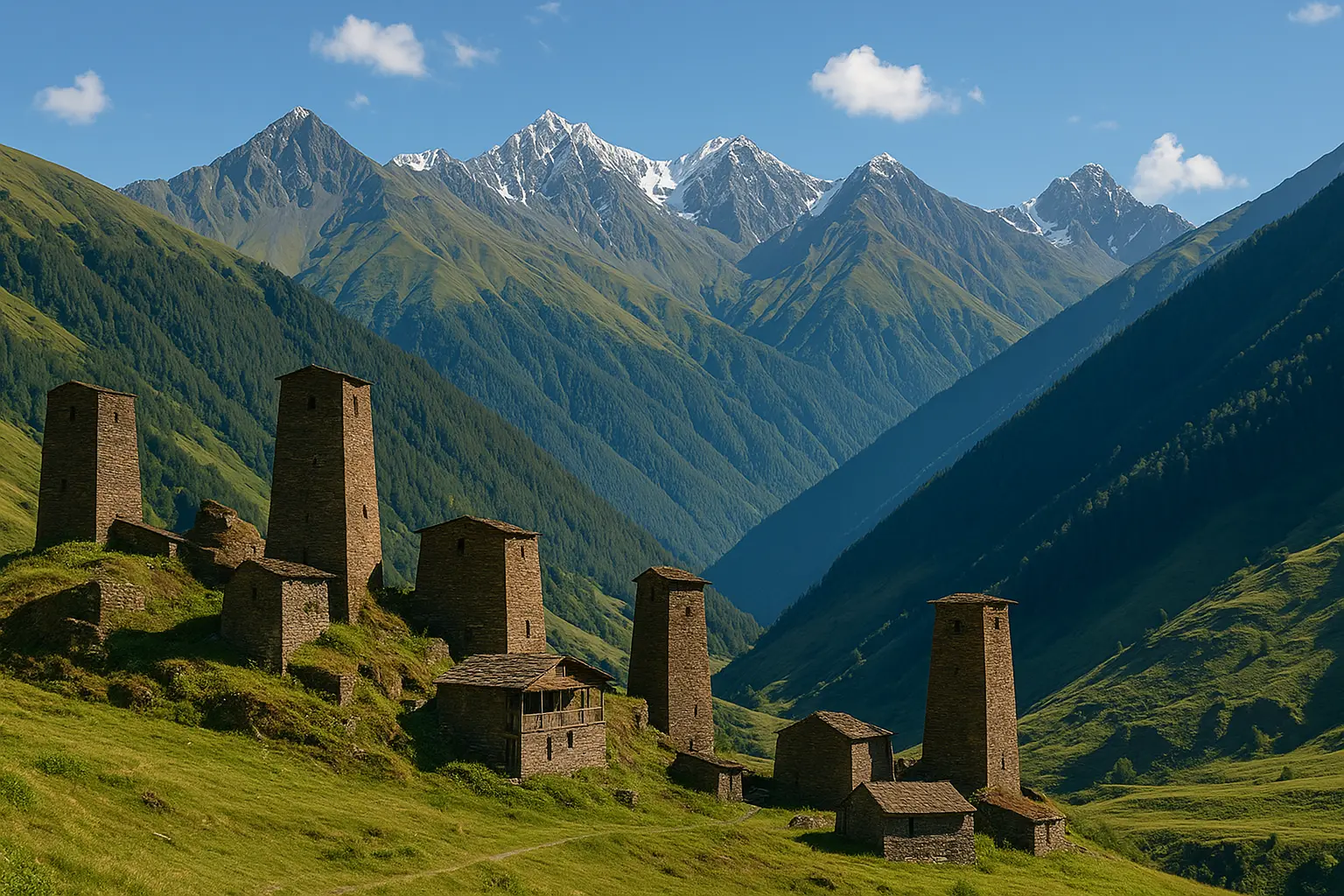
Tusheti, Georgia's most isolated and spiritually significant mountain region, stands as a testament to human resilience and cultural preservation in one of the most challenging environments in the Caucasus. This remote highland area, accessible only during the summer months through treacherous mountain passes, has maintained its unique culture, language, and traditions for over 2,000 years. The region's dramatic landscape, characterized by snow-capped peaks reaching over 4,000 meters, deep valleys, and ancient stone villages, creates an otherworldly atmosphere that has captivated travelers, researchers, and spiritual seekers for generations.
The Tusheti people, who speak their own distinct dialect of Georgian, have developed a unique culture that reflects their harsh mountain environment and centuries of isolation. Traditional Tusheti society was organized around extended family units, with each family maintaining its own fortified dwelling and participating in collective decision-making through village councils. The Tusheti people are known for their fierce independence, strong family bonds, and deep connection to their ancestral lands, which they have defended against numerous invaders throughout history.
The region's spiritual heritage is perhaps its most distinctive feature, with numerous sacred sites, shrines, and religious practices that blend Orthodox Christianity with ancient pagan traditions. The Tusheti people have maintained their traditional religious practices alongside Orthodox Christianity, creating a unique syncretic belief system that incorporates elements of ancient pagan traditions. Many Tusheti villages feature small chapels and religious sites that blend Christian and pre-Christian elements, reflecting the region's complex spiritual history.
Dartlo, the administrative center of Tusheti, serves as the heart of the region's cultural heritage and spiritual life. This ancient village, located at an altitude of 2,000 meters, features well-preserved stone houses with distinctive slate roofs, traditional defensive towers, and numerous religious sites. The village's isolation has helped preserve traditional Tusheti culture, including unique religious practices, traditional music, and distinctive culinary traditions that have been passed down through generations.
The region's natural environment, characterized by pristine glaciers, alpine meadows, and dense forests, provides a habitat for diverse wildlife including the endangered Caucasian leopard, brown bears, and numerous bird species. The glaciers of Tusheti, which feed the region's rivers and streams, are particularly important for understanding climate change impacts in the Caucasus region. Scientists have been monitoring these glaciers for decades, documenting their retreat and studying the implications for water resources and local ecosystems.
Traditional Tusheti cuisine reflects the region's harsh climate and limited agricultural opportunities, with dishes designed to provide maximum nutrition and energy for mountain life. Tusheti cheese, made from the milk of mountain sheep and cattle, is perhaps the most famous Tusheti culinary export and is prized for its distinctive flavor and nutritional value. Other distinctive foods include various meat dishes, dairy products, and preserved foods that can withstand the long winter months when the region is completely isolated.
The Tusheti people have maintained their traditional crafts and skills, particularly in areas such as wool processing, metalworking, and woodworking. These traditional crafts not only provide practical items for daily life but also serve as important cultural expressions and sources of community identity. Many Tusheti families continue to practice these traditional crafts, passing down skills and knowledge from generation to generation.
Access to Tusheti has improved significantly in recent decades with the construction of better roads and the development of tourism infrastructure, though the region remains relatively remote and challenging to reach. The journey to Tusheti, whether by road through the spectacular Abano Pass or by helicopter during the summer months, provides visitors with a sense of entering a different world, where time seems to move more slowly and traditional values remain strong.
The development of tourism in Tusheti has brought both opportunities and challenges for the local community. While tourism provides important economic benefits and helps preserve traditional culture by creating demand for traditional crafts and performances, it also poses risks to the region's fragile environment and traditional way of life. Local communities and government authorities are working to develop sustainable tourism practices that respect the region's cultural heritage and natural environment.
The future of Tusheti depends on finding the right balance between preserving traditional culture and adapting to the modern world. The region's young people face the challenge of maintaining their cultural identity while pursuing educational and economic opportunities that often require leaving the region. Programs aimed at preserving Tusheti language and culture, combined with economic development initiatives that create local opportunities, are crucial for ensuring the long-term survival of this unique cultural heritage.
Climate change poses additional challenges for Tusheti, with rising temperatures affecting the region's glaciers, changing precipitation patterns, and potentially impacting traditional agricultural practices. The region's communities are working with scientists and government agencies to understand these changes and develop adaptation strategies that preserve traditional livelihoods while building resilience to future climate impacts.
The preservation of Tusheti's unique cultural and natural heritage requires ongoing efforts to document traditional practices, support local communities, and develop sustainable tourism practices. These efforts are crucial for ensuring that future generations can continue to experience and appreciate the authentic Georgian culture and natural beauty that this region offers.