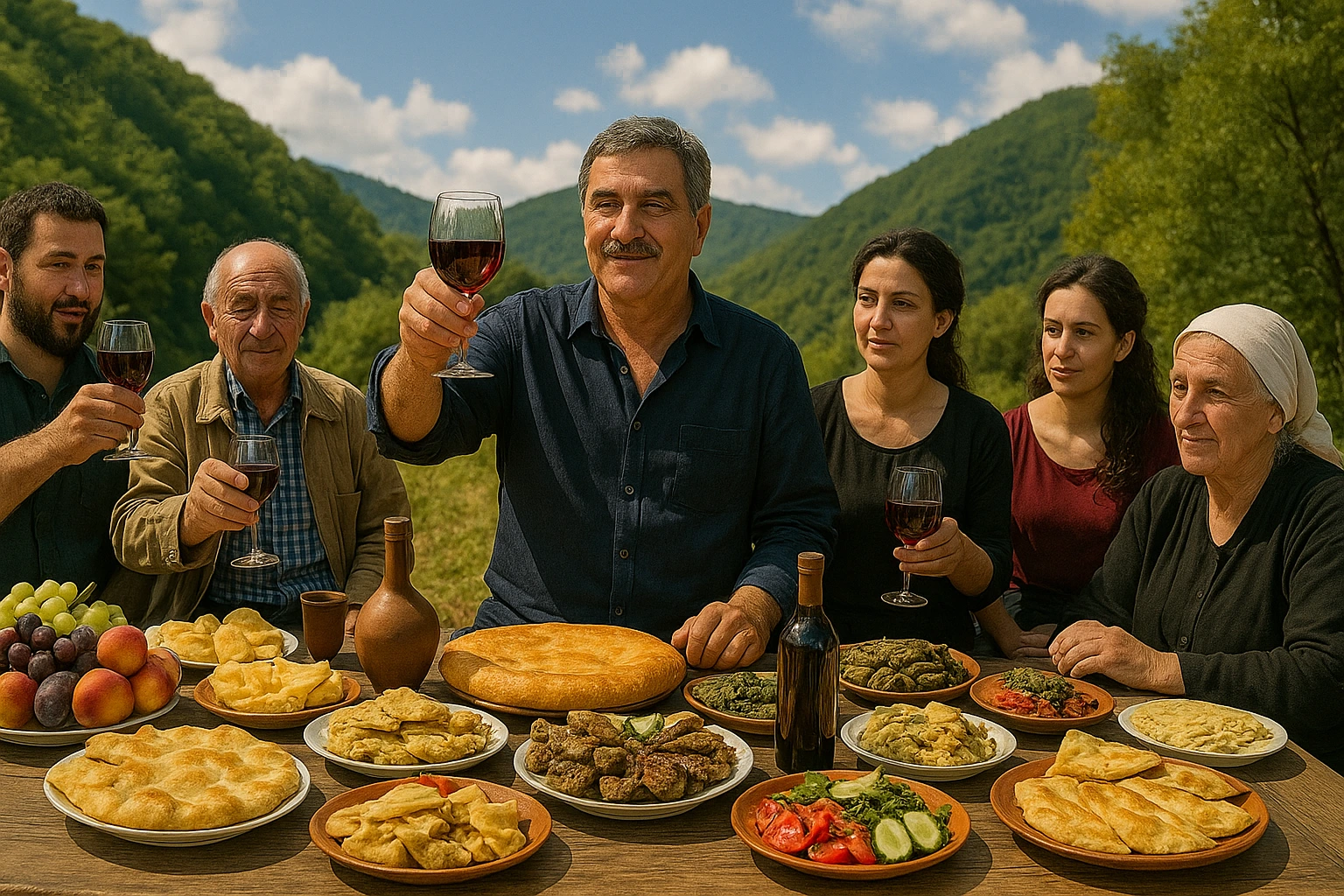
The Georgian supra, or traditional feast, represents one of the most distinctive and important cultural traditions in Georgia, embodying the country's deep values of hospitality, community, and cultural expression. This elaborate ritual of dining, drinking, and social interaction has evolved over centuries to become a sophisticated cultural practice that reflects Georgian social values, spiritual beliefs, and artistic traditions. The supra is not merely a meal but a complex social and cultural event that serves multiple functions in Georgian society, from celebrating important life events to maintaining social bonds and transmitting cultural knowledge.
The role of the tamada, or toastmaster, is central to the supra tradition and represents one of the most distinctive aspects of Georgian feasting culture. The tamada is responsible for leading the feast, making elaborate toasts, and ensuring that all participants feel welcome and engaged. This role requires considerable skill, knowledge, and social intelligence, as the tamada must balance tradition with innovation, respect with humor, and formality with warmth. The tamada's toasts often incorporate elements of Georgian history, literature, philosophy, and current events, creating a unique form of oral literature and cultural expression.
The structure and organization of a traditional supra follows a carefully prescribed format that reflects Georgian cultural values and social organization. The feast typically begins with a blessing and initial toasts that acknowledge the spiritual and cultural significance of the gathering. Subsequent toasts follow a specific order, addressing topics such as family, friendship, love, homeland, and cultural heritage. Each toast is accompanied by specific rituals and expectations, creating a structured but flexible framework for social interaction and cultural expression.
The culinary aspects of the supra represent another important dimension of this cultural tradition, with traditional Georgian cuisine playing a central role in the feast experience. The supra table typically features a wide variety of dishes, including various types of bread, cheese, meat, vegetables, and traditional condiments. Each dish has specific cultural significance and is prepared according to traditional recipes and techniques that have been passed down through generations. The presentation and serving of food follows specific cultural protocols that reflect Georgian values of hospitality and respect.
The social and cultural functions of the supra extend far beyond mere dining and entertainment. These feasts serve as important opportunities for community building, social networking, and cultural transmission. They provide occasions for families and communities to come together, share news, and maintain social bonds. The supra also serves as a forum for discussing important issues, resolving conflicts, and making collective decisions that affect the community.
The spiritual and religious dimensions of the supra reflect the deep connection between Georgian feasting traditions and Orthodox Christian beliefs and practices. Many supra traditions incorporate elements of Christian prayer and ritual, while maintaining connections to pre-Christian cultural practices. The blessing of the table, the sharing of bread and wine, and the acknowledgment of spiritual values all reflect the integration of religious and cultural traditions in Georgian society.
The regional variations in supra traditions reflect Georgia's diverse geography and cultural heritage. Different regions have developed their own distinctive approaches to feasting, with variations in food preparation, toast-making, and social organization. These regional differences help maintain local cultural identity while contributing to the overall richness and diversity of Georgian cultural traditions.
The contemporary evolution of the supra tradition includes various efforts to adapt this ancient cultural practice to modern social and economic conditions. While traditional supra practices continue to be important in rural areas and for special occasions, urban Georgians have developed new approaches to feasting that reflect changing social patterns and cultural values. These contemporary adaptations help ensure that the supra tradition remains relevant and meaningful for modern Georgian society.
The international recognition and appreciation of Georgian feasting traditions has grown significantly in recent years, with visitors from around the world seeking to experience authentic supra events. This international interest has created opportunities for cultural exchange and tourism development while helping to preserve and promote traditional feasting practices. Many restaurants and cultural organizations now offer supra experiences for international visitors, providing opportunities to learn about and participate in this important cultural tradition.
The educational and cultural preservation aspects of the supra tradition include various programs and initiatives aimed at maintaining and promoting this important cultural practice. Educational programs help young Georgians learn about supra traditions and develop the skills needed to participate in and lead traditional feasts. Cultural organizations work to document and preserve traditional supra practices while creating opportunities for cultural expression and community building.
The economic and social value of the supra tradition includes various benefits that this cultural practice provides to Georgian society and economy. The supra tradition supports local food production and traditional crafts, creating economic opportunities for farmers, artisans, and service providers. The social cohesion and community building that result from supra events contribute to social stability and cultural continuity.
The future of the Georgian supra tradition depends on continued efforts to preserve, adapt, and promote this important cultural practice. Educational programs, cultural events, and international collaborations will be essential for ensuring that the supra tradition continues to thrive and evolve. The commitment of communities, cultural organizations, and individuals to maintaining and developing this tradition will be crucial for its long-term survival and success.